What the numbers on your tire actually mean
Everything you need to give us over the phone is already written on the side of the tire you have.
September 7, 2026 · 4 min read
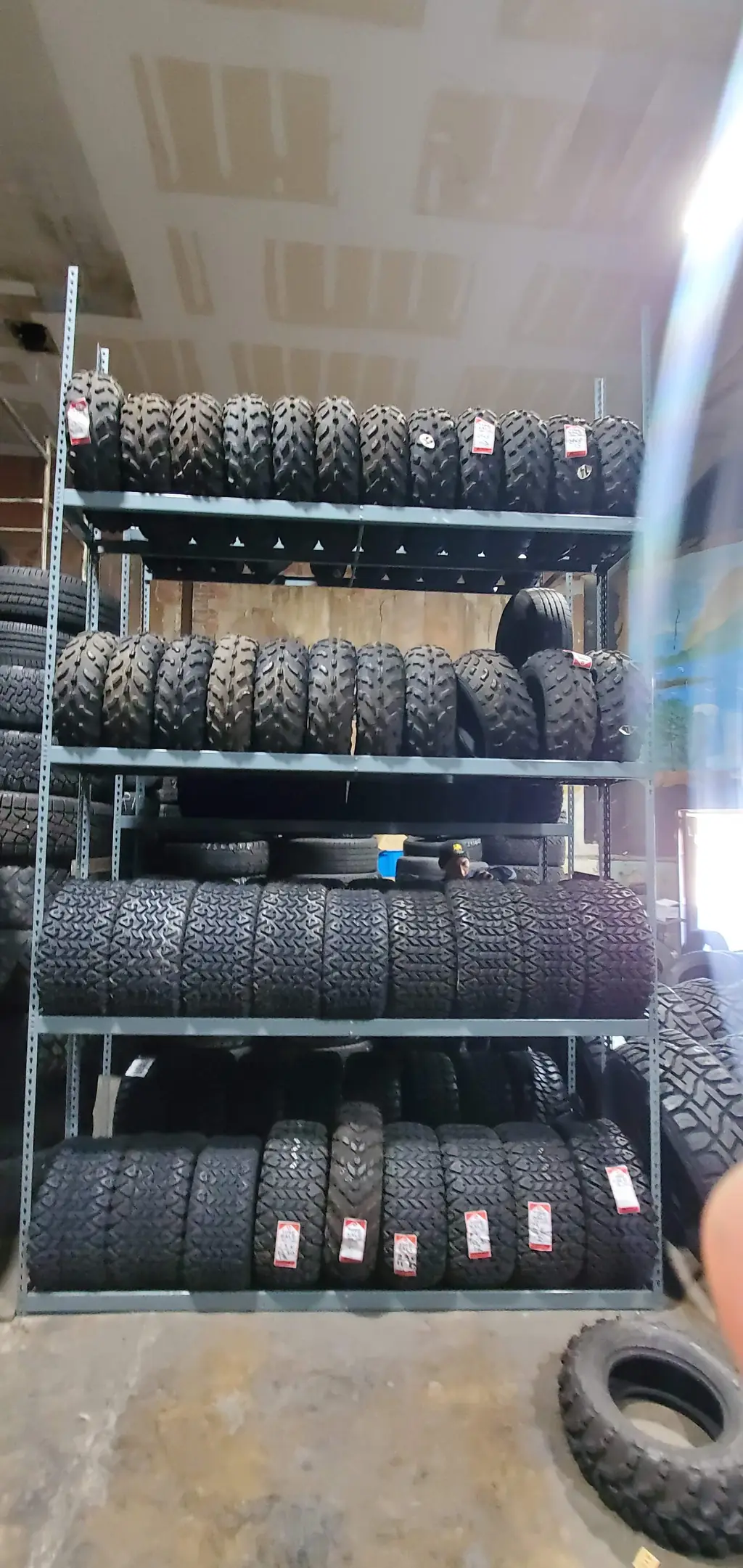
When someone calls the counter for a price, the fastest possible answer starts with the string of numbers moulded into the side of the tire. Most people have never been told what it means, which is fair enough, because nobody explains it when you buy a car. It takes about two minutes to learn and it saves a lot of guessing.
The main size string
Find a run of characters that looks something like 265/70R17. That is the size, and it is the single most useful thing you can read to us.
The first number, 265, is the width of the tire in millimetres across the tread. Bigger number, wider tire. The second number, 70, is not a measurement at all, it is a percentage: the sidewall height expressed as a proportion of the width. So a 70 on a 265 means the sidewall is about 185mm tall. This is why two tires with the same first number can look completely different. A low number like 40 or 45 is the short, stiff sidewall you see on performance cars. A high number like 75 is the taller, softer sidewall you see on work trucks.
The R just means radial, which almost every modern tire is. The last number, 17, is the wheel diameter in inches. That one is fixed by your wheel, not by preference. A 17 inch wheel takes a 17 inch tire and nothing else.
Load index and speed rating
Just after the size you will usually see something like 112T or 94V. The number is the load index and the letter is the speed rating.
The load index is the one that matters most on trucks. It corresponds to how much weight that tire is rated to carry, and it is not a suggestion. Fitting a tire with a lower load index than the vehicle calls for is one of the genuinely unsafe shortcuts in this trade, because the tire is being asked to do something it was not built for every time the truck is loaded.
The speed rating matters less for most drivers in Houston traffic, but it is still worth matching, because it tends to track with how the tire is constructed rather than just how fast it will go.
The date code, and why old tires are not always bargains
Somewhere on the sidewall there is a stamp beginning with DOT, and at the end of it a four digit number. That is the date the tire was made. The first two digits are the week of the year and the last two are the year. So 2224 means the twenty second week of 2024.
This is worth knowing because rubber ages whether or not it is being driven on. A tire that has sat in a warehouse for six years is not the same as a tire made last spring, even if the tread is untouched. It is a particular thing to check on a spare that has never been used, and on any tire being sold at a price that seems too good.
Tread depth and the wear bars
Look down into the main grooves of the tread and you will find small raised bars running across them. Those are the wear bars, and they are moulded in at the legal minimum depth.
When the surface of the tread has worn down level with those bars, the tire is finished. Not nearly finished, finished. In dry weather a worn tire still stops reasonably well, which is what fools people. In the kind of rain Houston gets, the grooves are what move water out from under the tire, and once they are shallow the tire starts floating instead of gripping.
- Check all four, not just the one that looks worst
- Check across the width of each tire, not only in the middle
- A tire worn on one shoulder but fine elsewhere is telling you about alignment, not about mileage
What to have ready when you call
If you can give us the full size string, we can usually price it there and then. If the tires are too worn or too dirty to read, the year, make and model of the vehicle will get us most of the way, though it is worth saying if the wheels have been changed from standard, because that changes everything.
Then tell us honestly what the vehicle does. A truck that tows at weekends and a truck that never leaves the freeway want different tires, and the difference in what they cost is usually smaller than the difference in how long they last on the wrong vehicle.
Call the Automotive Center on (713) 234-0629 for cars, trucks and SUVs. For fleet, OTR and heavy equipment, the Truck and Commercial Tire Center is on (346) 741-5592.
D H Tire, Inc, (713) 234-0629
Call (713) 234-0629More articles
When a flat tire can be repaired, and when it cannot
The honest version, including the cases where we will tell you the tire has to be replaced.
Tire pressure is the cheapest maintenance you own
It costs nothing, takes five minutes a month, and it is the single biggest thing standing between you and buying tires early.