Front end
Large truck wheel alignment
Front-end alignment for tractor-trailers and heavy trucks, because a set of steers that scrubs is a set you buy twice.
Chapter 01
How you know the front end has moved
Drivers usually feel it before anyone measures it. The wheel sits off centre on a straight road, the truck pulls steadily to one side, or the steer tires start wearing a feathered edge you can catch with a palm run across the tread.
By the time that edge is obvious, the tire has already lost a serious share of its life. Steer tires are the most expensive rubber on the truck to replace early, which is what makes alignment one of the highest-return checks in the whole maintenance list.
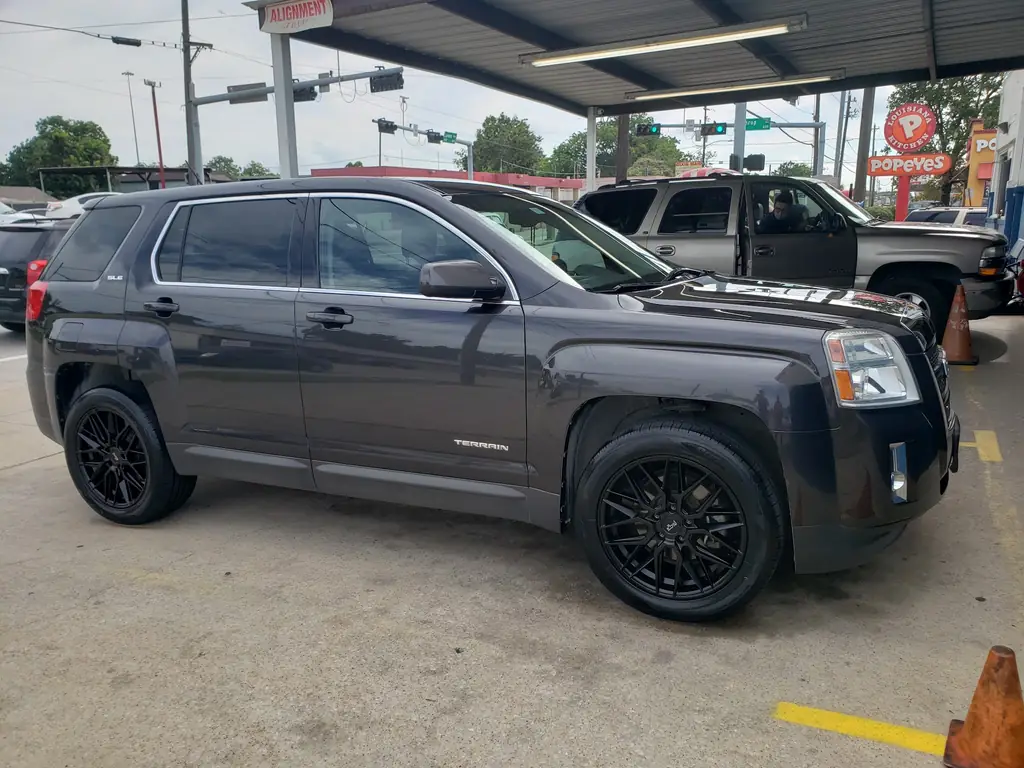
A customer vehicle at D H Tire with the shop's alignment signage visible behind it
What we set and why it matters
Front-end alignment on a tractor-trailer is about getting toe, camber and caster back to where the manufacturer intended, so the steers roll rather than scrub. A small toe error does not feel like much through the wheel but drags the tire sideways every single mile.
We do front-end alignments for tractor-trailers alongside the commercial tire work at N. McCarty. It is worth doing at the same time as a new set of steers rather than after, so the new rubber starts straight instead of inheriting the wear pattern that killed the last set.
Call (346) 741-5592 to talk through the unit before you bring it in.
Chapter 03
Keeping it straight afterwards
Alignment is not permanent. Kerbs, potholes and the ordinary punishment of Houston road surfaces move things over time, and a truck that has been aligned once is not aligned forever.
The practical habit is to check it whenever steers are replaced and any time a driver reports a pull or the tread starts wearing unevenly across the shoulders. Catching it at the first feathered edge is what keeps it to an alignment rather than an alignment plus two tires.
D H Tire, Family owned in Houston since 1987. Call (713) 234-0629.