Every service
Rotation and balancing
The two jobs that decide whether a set of tires reaches the mileage it was sold on, and the two most often skipped.
Chapter 01
Why the fronts die first
On most vehicles the front tires steer, carry more weight and do most of the braking, so they wear considerably faster than the rears. Leave a set in place for its whole life and you throw away two good tires at the same time as two worn ones.
Balance is the other half. A wheel that is even slightly out will shake through the steering at highway speed, and that vibration is not just uncomfortable, it works the suspension and wears the tire in patches.
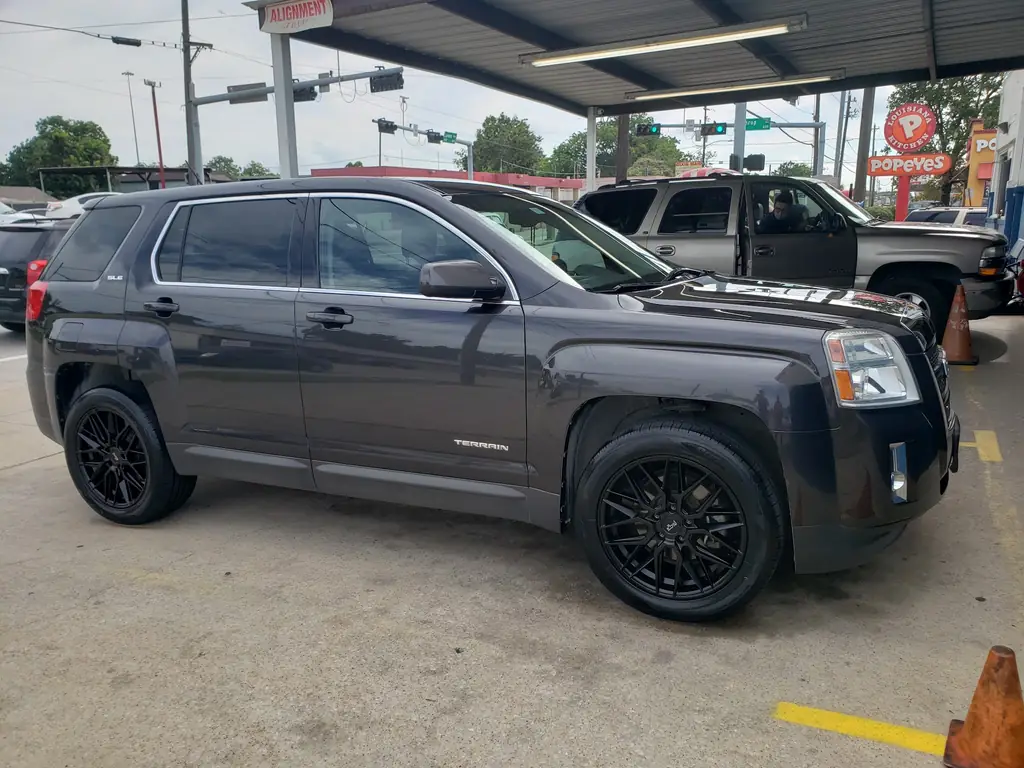
A customer vehicle at D H Tire in Houston with the shop's alignment signage behind
How we rotate and rebalance
Rotation pattern depends on the vehicle and whether the tires are directional, so it is not simply swapping front to back on everything. We check the tread depths across each tire first, because the pattern of wear tells you whether something else is wrong before the rotation hides it.
Balancing is done on the assembly with the wheel off the car, weights set properly, and the tire refitted and torqued to spec. If a wheel will not balance cleanly we will say so, because that usually points at a bent rim or a tire with a fault rather than at needing more weight.
Call the Lyons Ave counter on (713) 234-0629. This is quick work and it is the cheapest thing on the list.
Chapter 03
How to tell it is due again
Run a hand across the tread. If the inner or outer shoulder is noticeably lower than the middle, or the surface feels feathered in one direction, the set is telling you it has been in one position too long or the alignment has moved.
A vibration that appears only above about fifty miles an hour is almost always balance. A pull that is there at any speed is usually alignment. They feel different and they are fixed differently, so it is worth describing which one you have when you call.
D H Tire, Family owned in Houston since 1987. Call (713) 234-0629.